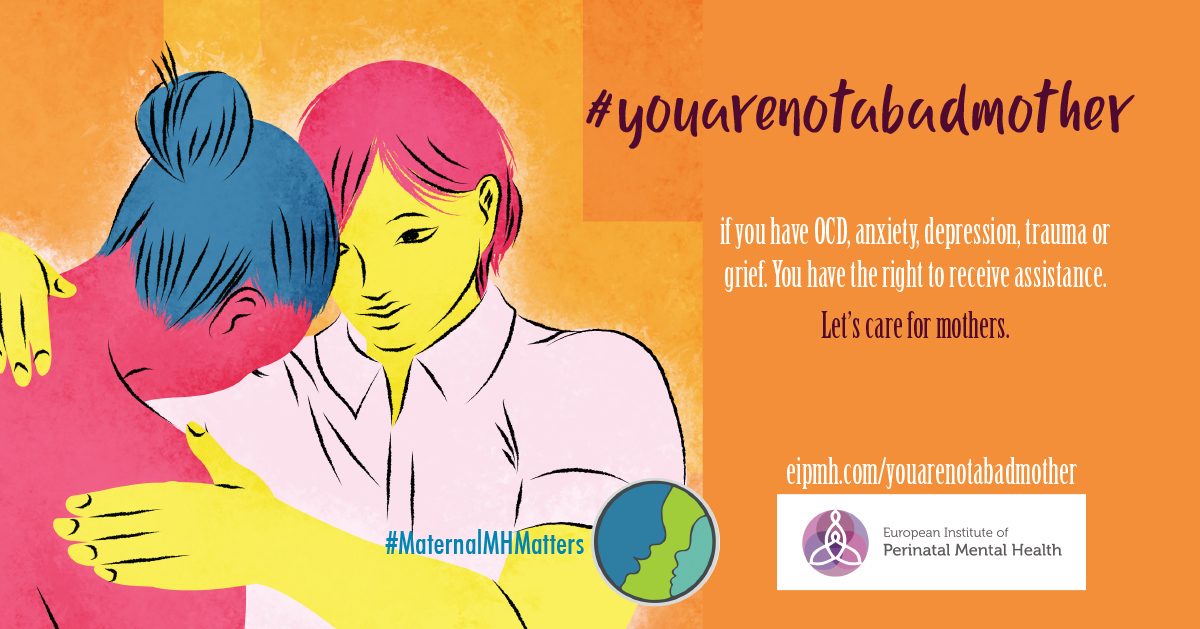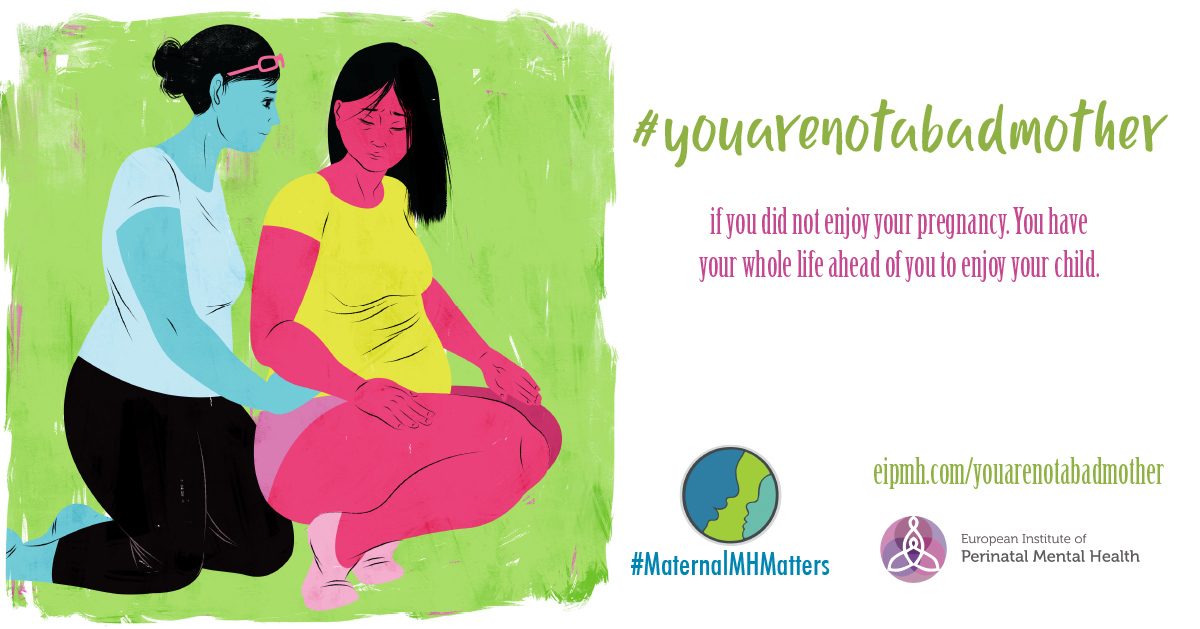
#youarenotabadmother if you have OCD, anxiety, depression, trauma or grief

#youarenotabadmother if you have OCD, anxiety, depression, trauma or grief. You have the right to receive assistance. Mothers with psychological distress or mental health issues usually feel guilty or ashamed about reaching out for the professional help they require. Let´s offer to help – let´s care for mothers. One out of five mothers may suffer…

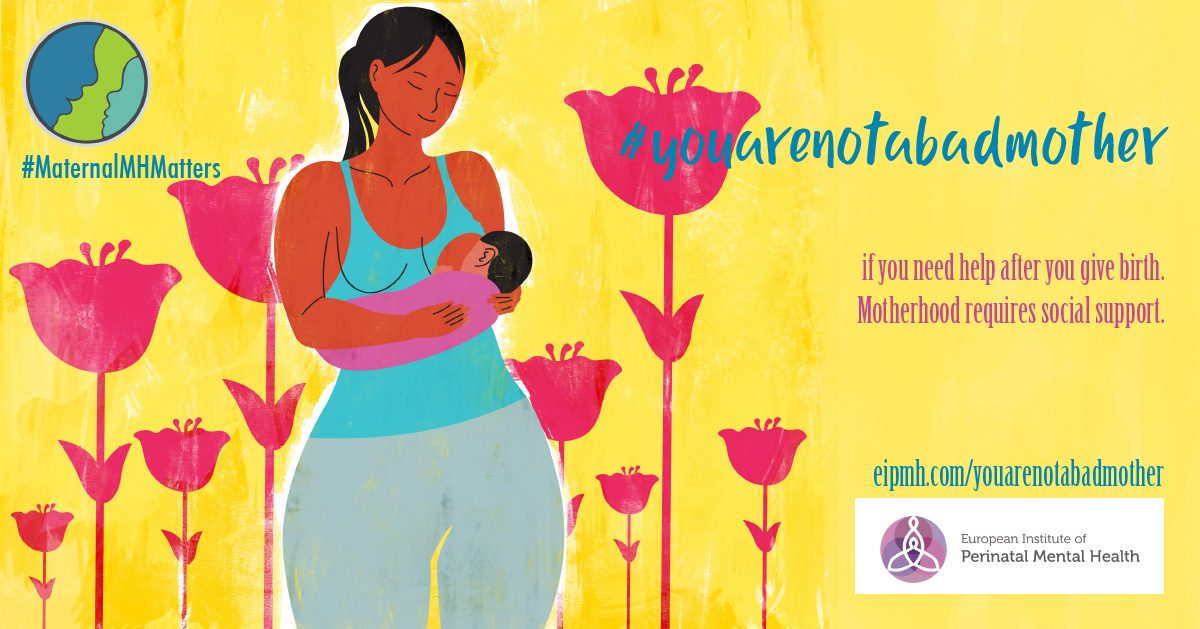
#youarenotabadmother if you need help after you give birth

#youarenotabadmother if you need help after you give birth. Motherhood requires social support. The postpartum period in the human species is designed to happen within a maternal social network. Support from other mothers helps make the experience a better one and prevents psychological distress. Let´s create those networks – let´s care for mothers.   If…

#youarenotabadmother: A campaign against stigma and blame

    The first World Maternal Mental Health Day was celebrated in 2016, and is commemorated every year in the first Wednesday of May – this year, May 6th 2020. World Maternal Mental Health Day was launched to raise awareness about mental health problems in the perinatal period, so as to encourage women to seek…

Midwives, Art Therapy and fear of birth

Fear of childbirth (FOC), also referred to as tokophobia, is related to feelings of limited capability in the face of childbirth and affects the pregnant woman’s quality of life. It is more common in nulliparous women but can also be related to earlier traumatic birth experiences. A new study, recenlty published in the Journal of…

It matters how you give birth: mode of delivery and mental health

A study published in the latest edition of Archives of Women’s Health has found that instrumental births (those requiring forceps, vacuum extraction, etc.) and cesarean sections are related to a higher number of psychological difficulties after birth – ranging from lack of adjustment to motherhood to post-traumatic stress disorder. To put these conclusions into perspective,…